Blog
Integrate the Enterprise – Chris Noe
posted on Aug 12 in NewsGreetings all. Short topic this week but one that is near and dear to my heart. For those of you who are familiar with my background, you know that I have worked in the software and IT services industry for several years, most recently in the cloud computing and CRM space.
One of the things that I constantly stress with my customers and prospects is the importance of defining business processes and aligning them to a corporate strategy before selecting a technology solution. Too many organizations make the mistake of picking the tool before they have any idea what they will use it for. This is especially true for front-office type applications like customer relationship management.
The concept of “CRM” has been around for decades, with software companies capitalizing on the idea of enterprise CRM in the 90’s and 00’s. Organizations know that they need to bridge the gap between sales and marketing, increase sales productivity, decrease support costs, and increase customer satisfaction. In some cases, they believe that implementing a CRM solution will magically provide all of these things for them. More often than not, this approach to front-office application deployment results in lots of wasted time and money.
In today’s world, I often run across organizations who are on their second, third, fourth, or even fifth iteration of a CRM application. Past failures can often be attributed to poorly designed business process that do not align with corporate strategies. From a CRM perspective, defining the customer life cycle and touch points in an organization is far more important in the early stages of a project than picking a tool to manage customer data.
At Concord, we believe in a concept we refer to internally as “integrate the enterprise”. The word integrate, in this case, doesn’t exclusively relate to integrating technology platforms. It’s more about bringing together people, process, and technology to work in a cohesive matter to achieve the strategic vision for the organization. By focusing on the people, the process, and the technology, organizations will realize positive return on IT investments which will have a significant influence on growing their business.
Chris Noe
http://www.linkedin.com/in/chrisnoe
Concord Case Study
posted on Aug 03 in NewsDOMAIN INVENTORY CASE STUDY
…from anecdotal to fact based decision making
WHO BOUGHT DOMAIN INVENTORY SOLUTION?
Client is a Fortune 50 corporation with a systems topology that is large and complex; a byproduct of multiple mergers and acquisitions. Concord was selected to strategically implement a Domain Inventory solution for the executive team. The project was launched within a division of the organization. This division is:
• Comprised of six business units
• Has a $250MM annual budget
• Employs 950 IT employees
• Encompasses 117 mission critical systems
• Is spread over nine key geographic locations nationwide
The executive sponsor of our solution had two goals:
• Demonstrate clarity with respect to an overall systems landscape
• Provide business and IT leadership with a transparent view of systems complexity
WHY DID THEY BUY IT?
Faced with a rapidly expanding and changing systems environment the organization needed to achieve a clear understanding of the current state prior to an evaluation around a future state. This was increasingly difficult because there was not a comprehensive view of the overall systems architecture.
Much of the knowledge existed “tribally” – either in disconnected file stores and SharePoints or was undocumented. It would be necessary to tap this knowledge in order to create an overall depiction of the systems environment. In addition to the lack of clarity around the current state the executive was also faced with:
• Multiple mergers and acquisitions that increased systems complexity.
• A need to streamline processes and technology.
• Regulatory and compliance pressures.
• Budget pressures.
• A need to demonstrate improved IT value.
In their current state the organization was forced to make decisions based on anecdotal information and had no way of measuring
or proving IT return on investment.
It was apparent a clear understanding of the current systems state was needed. The Domain Inventory consulting solution would allow the organization to capture organizations, actors, capabilities, systems, connections, technology, standards and skills.
This capture of knowledge would help the organization establish a clear current state of its systems environment. Once established, it would be possible to determine the systems road map to focus on consolidation, simplification and failure prevention.
After a brief pilot program focused intently on a single business unit, the value of the Domain Inventory approach was evident. This led to a follow on engagement where the approach would be applied across the entire organization.
HOW DOES IT HELP?
System Consolidation and Redundancy Elimination
The approach and the associated delivery help to identify systems that offer similar features and capabilities. Once these systems are identified they can be studied further to see if they can be consolidated. The inventory also offers inputs to the consolidation process by helping identify the system that fits better with the overall organization technology stack and the organization skill set.
Critical Point of Failure Analysis and Disaster Planning
It is now easier for the organization to see which systems are highly connected, making them critical points of failure. Another area in which the Domain Inventory helps is its ability to identify systems that are outdated and should be decommissioned. Often these systems are active only because they offer certain features that have not yet been migrated to newer technologies. The solution helps identify these systems and hence can also highlight those systems that need to be upgraded.
Budgetary Planning
System consolidation and critical system analysis leads to a process of budgetary allocation that is fact based and transparent. Redundant platforms can be eliminated and additional funds can be allocated to systems that are critical. In addition to systems consolidation, the process helps identify connections that can be grouped together because of their similarity with each other. This helps identify the necessity of Application Integration tools or service buses that can help not only simplify the systems architecture but also eliminate cost.
WHAT HAVE THEY LEARNED?
The Domain Inventory approach has given the organization a single repository for systems architecture. This has made understanding systems easier and much more transparent. Systems domain knowledge is no longer under the purview of a few, but is available to all. Domain experts see the benefits of contributing to the Domain Inventory because it helps them understand the systems that interact with their own – the proverbial “other side of the fence”.
The Domain Inventory learnings are not limited to system understanding. They also play a large part in helping identify missing and undocumented connections and technologies. Through the process of consultative domain inventory capture, we have helped identify multiple “new” undocumented connections that may previously have gone unnoticed.
HOW HAS THE SOLUTION CHANGED THE CLIENT?
The Client is now better suited to move forward and plan a road map based on current system state. Rather than base a roadmap on anecdotal evidence and the technology-du-jour the systems, planners and executives can evaluate their current state to arrive at the appropriate next steps for each of their systems.
Get to Know a Concordian – Javier and Callie
posted on Jul 21 in News
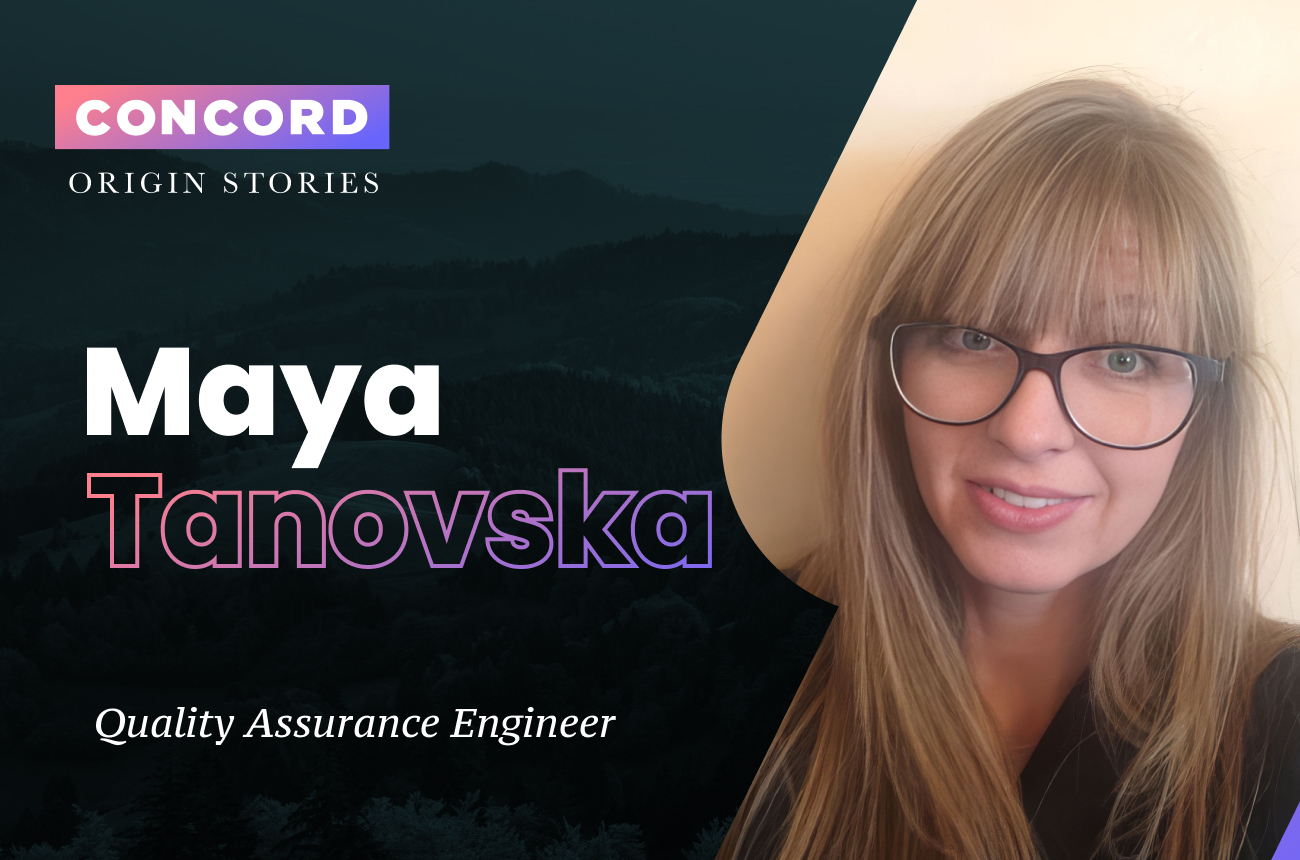
Callie Pastor
Concord, Resource Manager
What is your current role or what are your current project(s) at Concord?
Resource Manager. My primary focus is supporting our consultants.
Where were you born?
Edina, Minnesota
What was your first job?
Professional Sandwich Maker at American Hero, a small sub shop in Edina. I was 14; making $6 an hour and told my parents it felt good to finally be “financially independent.” I had no clue.
What is your greatest achievement?
Finishing my first half marathon after years of telling myself I could never do it.
Words to live by?
If you do what you’ve always done, you’ll get what you’ve always gotten.
Person in history you would most like to have dinner with?
Either Doris Day, my all time favorite actress or Brett Favre, to convince him to come back for another season with the Vikings (no hate mail, please).

Javier Barberena
Concord Consultant
What is your current role or what are your current project(s) at Concord?
Informatica Architect for WGS (Consumer HUB).
Where were you born?
Managua, Nicaragua (this is in Central America for those that do not know geography very well).
What was your first job?
My parents owned a grocery distribution center and I helped out any time I could. I did not get paid for helping … is this considered a job? My first paying job was a security guard at the University of Wisconsin in Milwaukee. I held this job when I was working on my undergraduate degree.
What is your greatest achievement?
Learning English, one of the most difficult languages.
Words to live by?
Learn from your mistakes.
Person in history you would most like to have dinner with?
Currently living – Bill Gates and Steve Jobs. Deceased- Albert Einstein.
Concord Named One of The “Best Places to Work” in 2010
posted on Jul 19 in News
Concord was recently named one of the Best Places to Work by The Minneapolis St. Paul Business Journal.
In order to be eligible for the award, employees of qualified companies needed to complete a web-based survey answering questions regarding the workplace. Concord was a winner within the small business category and will be honored at a luncheon on August 26, 2010 at the Minneapolis Hilton.
This is Concord’s fourth time achieving the Best Places to work accolade from The Minneapolis St. Paul Business Journal.
To learn more click HERE.
Concord Foundation Luncheon
posted on Jul 13 in NewsJoey Johnson
The Concord Foundation luncheon took place on Wednesday, June 9 at Concord’s corporate office. As I walked into the lobby, I was greeted by the three new Concord scholarship recipients, Jenny Ortiz, Stephanie Sanchez-Ortiz and Liban Ashkir. My initial thoughts of the group were of course how nervous they seemed, but also how much they reminded me of Emma, Halima and myself, the 2009 scholarship recipients. They seemed excited and intimidated but very much grateful to have a unique opportunity such as the Concord Foundation presented to them. I remember at our own luncheon thinking how strange it seemed that people we barely knew were ready to invest in and see us through four years of college. The faith everyone had put into us was beyond belief and very much flattering. It gave us a great sense of pride and an extraordinary amount of reassurance that we would reach success in which ever career we pursued.
From meeting with the three new scholarship recipients, I have come to realize that Emma, Halima and I have grown a significant amount as students, employees and individuals. It has not been but two years since it was us at our luncheon. We were high school seniors; naïve to the insignificance of trends and gossip, with nonexistent schedules who transitioned into freshman interns with meetings and deadlines. All together we worked a total of 240 hours, soaking up the fundamentals and concepts behind sales, recruiting and operations of Concord, as well as the importance of time management, relationship building and staying relevant.
We are all excited about the new scholarship recipients and the journey they have ahead of them.

From L to R: Joey Johnson (2009 scholarship recipient), Jenny Ortiz, Stephanie Sanchez-Ortiz, Liban Ashkir (2010 scholarship recipients), Jeff Northrup and Peter Haugen (Concord Foundation co-founders)
We will eventually get to see them through the experiences of their first days here at Concord, as well as their first year in college. Inexplicitly, I feel that Emma, Halima and I will act as mentors for Jenny, Stephanie and Liban for we are the only ones who have experienced the Concord internship. I can only speak for myself when I say that I am beginning to feel a certain pride and confidence in my job, knowing that I have obtained skills I can pass on to someone else. This certain confidence continues to grow as I gradually get to know everyone. I know that with time I will be as comfortable as can be and obtain even more skills I will hopefully pass on to the future recipients.
Connect with Joey at his Blog, found HERE
Make a charitable contribution HERE
Ten Years of Internet and Mobile Computing
posted on Jul 01 in NewsHey there folks, Chris Noe here again. Today I thought I would step back and reflect on the last 10 years and talk about the Internet, mobile computing, and impact of social media on my personal and professional life. It’s an exercise I encourage you all to go through because it really is amazing to think about how things have progressed over the last 10 years….
10 years ago (2000) - I picked up my first cell phone. A Sprint PCS brick with amazing clarity. Interestingly enough, it always dropped calls in front of the Sprint world headquarters in Overland Park, KS. All it did was make and receive calls but it was an amazing thing for me at the time. I also landed a programming job at a software company by sending in a paper copy of my resume.

9 years ago (2001) - Wikipedia is launched. One of the greatest collaborative, non-profit sites on the Internet today. I would hate to be a door to door encyclopedia salesmen in this day and age. Oh yeah, and something called the iPod was released by some fruit company.

8 years ago (2002) – Everest Communications dug a trench in my yard and buried one cable that carried my Internet, phone, and cable television signal. I bought a wireless router…Great, now I can work on my deck.

7 years ago (2003) – I signed up for my eBay account. I haven’t been Christmas shopping in a mall since. I subscribed to the Star Tribune, printed on paper.
6 years ago (2004) – Oracle and PeopleSoft “merge”. Google raises nearly $1.7B with its IPO. Their current market cap is $144B. Google is the first place I go when I need information. It’s hard to believe their simple homepage is the front door to such a vast sea of information.

5 years ago (2005) – Blackberry!!! In hindsight, I should have picked up one of these as well.
4 years ago (2006) – Google purchases an unprofitable YouTube for $1.65B. YouTube is great humor therapy. YouTube founders Steve and Chad awkwardly celebrate the moment.
3 years ago (2007) – I land a job with a premiere software as a service solution provider through a LinkedIn connection.
2 years ago (2008) – Madeline Grace Noe is born. Two phone calls are made to our parents with the news. The rest of the world is alerted via Facebook, Email and Picasa.
1 year ago (2009) – I finally break down and buy an iPhone. What took me so long!!!
2010 – All I really need for survival is my iPhone…I get all my news digitally via Twitter and Google and I have fun conversations with the strib guys when they call my house trying to sell me print news.
-Chris Noe, Director of Cloud Computing
Exclusive Interview with Chris Noe
posted on Jun 21 in NewsChris Noe was born and raised in the sea of corn we like to refer to as Iowa; in the small town of Cresco, home to America’s first commercial airline stewardess, Ellen Church. As a young lad with obviously nothing to do, he gazed longingly at the clouds in the sky. It was through these youthful ruminations that inspired Chris to enroll at the University of Northern Iowa (at UNI, you enroll, there is no acceptance) and thus began a lifelong fascination with Management Information Systems.
After a move to Minneapolis, Chris was plucked by Salesforce from a LinkediN connection, and shortly became a Sales Consultant for the CRM powerhouse. He’s now the Director of Cloud Computing at Concord, and I grabbed a few minutes of his time to find out what the heck he does every day.
What would you say you do here?
[Chris Noe] I joined Concord to help develop a practice devoted to delivering cloud computing technology services for our clients. I currently have a broad scope of responsibilities including cloud marketing strategy, sales, technology partnerships, architecture, design, development, and delivery of cloud based services. I also spend as much time as possible enhancing Concord’s own use of Salesforce.com as a tool that helps drive our business.

Ellen Church
CN: We look at cloud computing as another viable technology option that can help companies grow their business without growing their infrastructure footprint or adding staff. It’s a great complement to our other practice areas because it gives clients the opportunity to offload some of the administrative burden associated with on premise applications and infrastructure so they can focus on more strategic initiatives for their organizations.
Why should people care?
CN: Traditionally, an average of 80% of the IT spend for an organization is considered “dead money.” These costs are associated with “keeping the lights on” for existing systems. That leaves only 20% which can be spent on transforming the business. By moving to cloud based solutions, organizations offload many of the traditional costs and resource requirements of on-premise solutions including infrastructure support, backups, and application and hardware upgrades.
This allows them to focus their energy on delivering real value to the organization in the form of new application development and enhancements to existing systems and business processes. IT organizations that utilize cloud computing technologies are more closely aligned with the overall business strategy and the solutions they deliver on these platforms help the organization realize a competitive advantage in the marketplace.
What’s your least favorite Cloud “buzzword” and why?
CN: Web 2.0. It’s an old and tired term. I don’t like to think of the “web” in terms of versions. Internet technologies are constantly evolving and the pace of change cannot be captured or quantified by version numbers.
iPhone or Droid?
CN: iPhone

IE of Firefox?
CN: Firefox
Strokes or Stooges?
CN: Strokes

How has your background helped you build Concord’s Cloud Strategy?
CN: I spent 2.5 years working in enterprise sales at Salesforce.com. My entire career has been focused on designing, building, implementing, and selling software solutions in a variety of technology environments and verticals.

What do you do when you’re not taking Clients into the Clouds?
CN: Trying to keep up with my 20 month old daughter

Twitter handle?
CN: Chris_Noe
What would you say to the Cloud haters of the world?
CN: Cloud computing is real and it is here to stay. Lead, follow, or get out of the way.
Top three favorite websites, cloud-related or other?
CN: google.com/reader, hootsuite.com, linkedin.com, developer.force.com
That’s actually 4. It appears you can’t count that well. Are you smarter with Clouds than you are with numbers?
CN: Yes, much better with clouds. I only work with 1’s and 0’s so anything greater than that and I’m lost. Remember, there are 10 types of people in the world, those who understand binary, and those who don’t.

How do you address the concerns of our larger clients who are apprehensive about storing all of their data in a warehouse in Murfreesboro, TN?
CN: Realistically, I don’t think large enterprise organizations will get to the point anytime soon where ALL of their data will be stored in the cloud. I feel that large enterprises will adopt a hybrid strategy whereby their most critical data and applications will still reside within their four walls.
I also believe that applications and infrastructure that they choose to manage in a cloud based environment may in fact be more secure than those they host internally. Cloud providers have the best and brightest working around the clock to ensure that their systems are secure and that they perform as good or better than on-premise applications.
What does the future for Concord and the Cloud look like?
CN: The future for Concord and Cloud looks extremely positive. Concord’s focus on emerging technologies such as cloud computing help us stay relevant with our clients. Every IT organization has cloud computing on their radar and they are constantly looking for ways to enhance their existing usage of cloud technologies or find new use cases. We can help bridge the gap between a cloud vision and reality.
If Concord and the Cloud made a baby, what would you name it?
CN: They would most likely have twins and would be named Thunder and Lightning.
What’s your favorite type of Cloud? Stratus, Cumulus, Cirrus, or the very rare Cumulonimbus?
CN: No contest, Cumulonimbus. I spent 7 years living in the middle of tornado alley. The Cumulonimbus is much more common there and a phenomenal site. By far my favorite cloud.

Contact info: Linkedin, Twitter, Facebook, email, phone, whatever you’re comfortable with -
http://www.linkedin.com/in/chrisnoe
http://www.twitter.com/Chris_Noe
Mobile 952-223-1265
Check it out: Chris Noe will be contributing often regarding Concord’s evolving cloud strategy, and how best to bbq a beef brisket. Get us in your RSS feed !
Stay Relevant
posted on Jun 16 in News
People in “business” love to talk about mission statements or “five year plans”. I often hear people discuss “aligning to your goals” or “casting their vision.” I am fine with all that – for you. Not for me. Not for Concord. Now don’t get me wrong, there is nothing wrong with a successful business focusing on adhering to their mission statement, or vision, or five year plan. But we at Concord have taken a different approach altogether.
We are trying to adhere to one thing and one thing only: staying relevant. Now, some might call that a mission statement (or plan, really), and I would not necessarily fight that. However, have you read a typical mission statement recently? They are usually so overly word-smithed that they have lost their edge. They become benign. Long winded sentences that account for every last variable and are ensured not to offend. But staying relevant, now that has a bite to it. In fact, the inverse terrifies me. Waking up one day and finding this company (or myself, for that matter) irrelevant is a horror show.
And having a traditional “plan” tends to complicate things for me. I have seen too many companies “stick to their plan” and slip out of relevancy. Believe me, it is easy to do. The computer industry transforms itself every six months nowadays. And the clients we serve are changing almost as quickly with government regulations or recession economics or their own relevancy initiatives. What if your clients or the industry you serve no longer aligns with your “strategy”? Well, the answer is obvious to me – change your strategy – immediately.
One way to look at this, I guess, is to have a fluid plan. One that can change on a dime. A plan that is “agile” or “iterative’. Another way is to not have a plan. I mean, what is wrong with that? Since when did having a plan define good business strategy? I have a “plan” for you – stay relevant. That is our 30/60/90 day plan.
And our 1/5/10 year plan.
Stay relevant.
Jeff Northrup, CEO